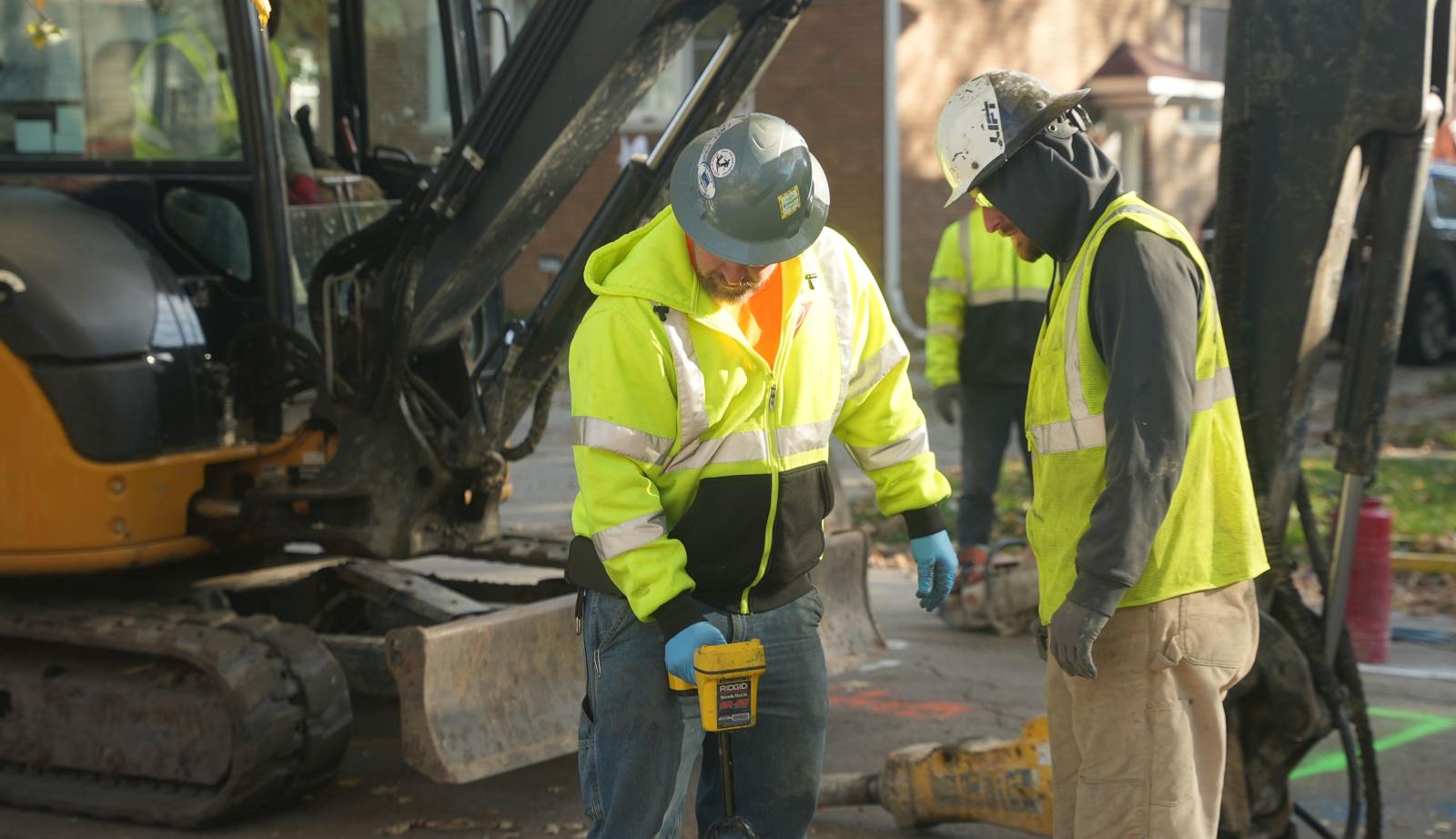
The Illinois Environmental Protection Agency has released the final Public Water Supply Loan Program (PWSLP) Fiscal Year 2027 Intended Use Plan (IUP). The PWSLP is the largest source of funding for lead service line replacement in Illinois. The IUP highlights projects approved to receive State Revolving PWSLP loans in fiscal year 2027. Other categories of applications include Scored Projects but Funds Exhausted, Projects with Planning Approval (start date after March 2027), and Projects without Planning Approval.
Highlights of the IUP include a budget of $505,336,121 for LSLR projects; 95 LSLR projects funded (receiving $226,727,510 in principal forgiveness (PF) loans and $278,608,611 in 0% interest loans); and the planned replacement of approximately 30,000 lead and galvanized service lines requiring replacement (GRR). Public water suppliers submitted a total of $1,378,286,834 in proposed LSLR projects. Of the LSLR projects funded, suburban Cook County is expected to receive approximately $238 million to remove approximately 16,000 lead or GRR service lines, assuming communities complete all steps to finalize the loan process.
Changes to principal forgiveness allocation will impact how PF is distributed. In previous years, PF funding was essentially the same for all applicants qualifying for PF or $2,465,000 per application, with the remainder committed as a 0% interest loan. The agency’s new methodology uses census tract median household income (MHI) as an indicator of need for more equitable distribution on a sliding scale.
For example, applicants with MHI below 50% of the state MHI ($83,390) can receive 100% PF for the project up to a maximum of $4.5 million, and applicants with an MHI of 81% to 99% would receive 40% to 20% of the application total in PF, respectively. PF scores will be applied to census tracts included in the application. This should result in a more equitable distribution of PF.
In addition, the Lead Service Line Inventory (LSLI) grant program will be renewed, and additional funds will support technical assistance focusing on rural communities and water efficiency. Completing a comprehensive LSLI will help communities establish the removal rate needed to meet the new Lead and Copper Rule Improvement requirements. Cook County TAP encourages any community with many service lines classified as “made of unknown material” to apply to the LSLI grant program. We will also keep you informed as we learn more about new technical assistance offerings.
What's Next for Illinois' SRF PWSLP?
Cook County TAP continues to monitor the status of funding for LSLR in Illinois. During fiscal years 2022 to 2026, SRF loan programs have received supplemental funding for LSLR from the Infrastructure Investment and Jobs Act (IIJA), adding $15 billion to identify and replace lead service lines nationwide. As addressed in the Environmental Policy Innovation Center (EPIC) blog 2026 Lead Pipe Funding: What the Final Round of IIJA Reveals, Illinois has received the largest share of LSLR funding through IIJA (also known as the Bipartisan Infrastructure Law or BIL), but $14 million less in FFY 2026 than in FFY 2025. Even with the reallocation of unused funds from other states for FY 2027, IIJA funding is estimated to replace just 15% to 20% of Illinois’ lead service lines.
There is an anticipated “funding cliff” once IIJA sunsets if additional funding for the program is not allocated. Illinois is expected to see reductions in PWSLP of approximately $385M in FFY 2027, which starts October 1, 2026. Without the renewal of IIJA or similar legislation, the Illinois SRF PWSLP will fund fewer LSLR projects. Congress is currently debating the next round of infrastructure funding as part of the Water Resources Development Act. Cook County TAP is following the developments closely. In the meantime, we encourage public water suppliers to take advantage of the current funding and apply now.